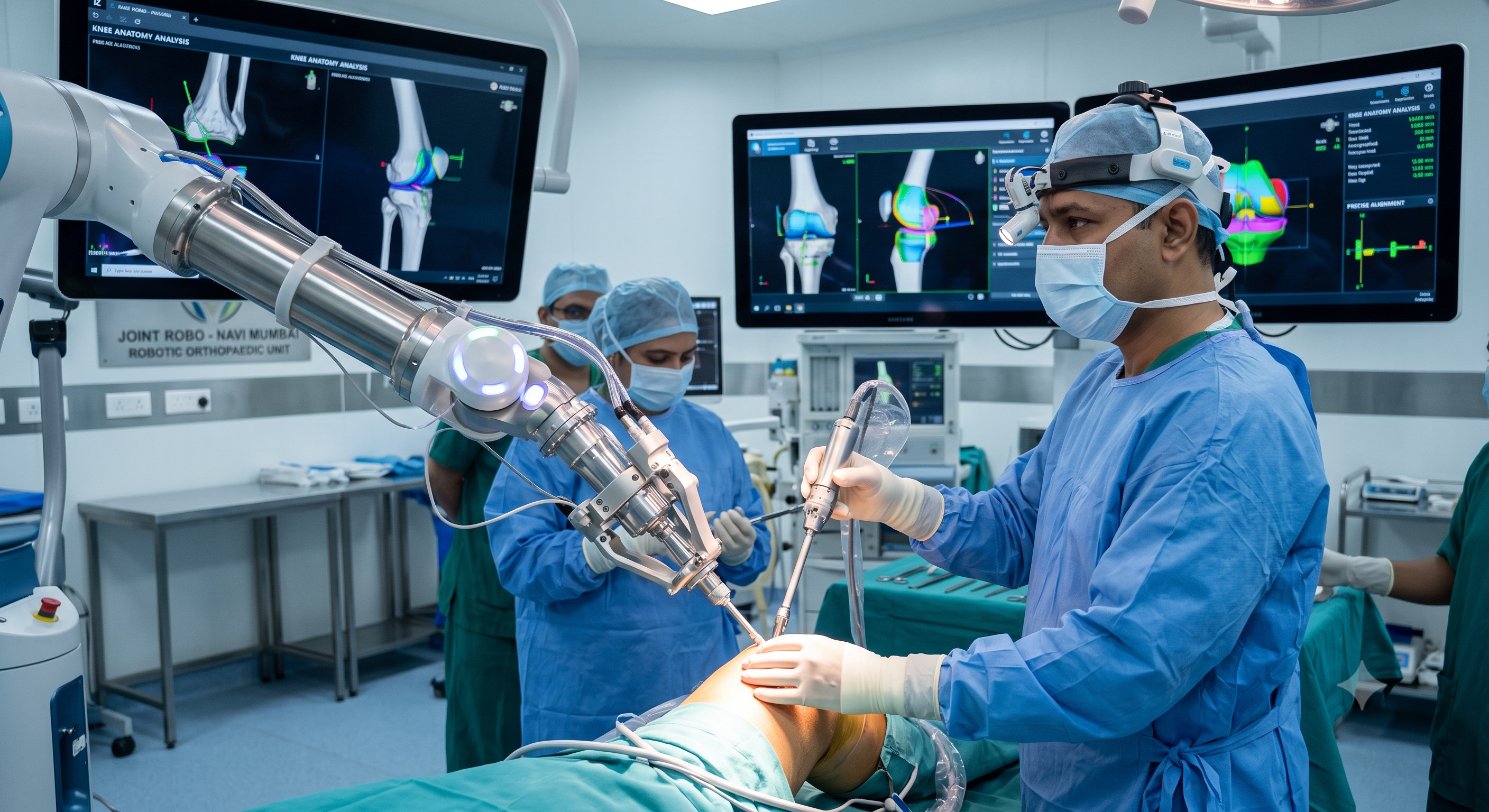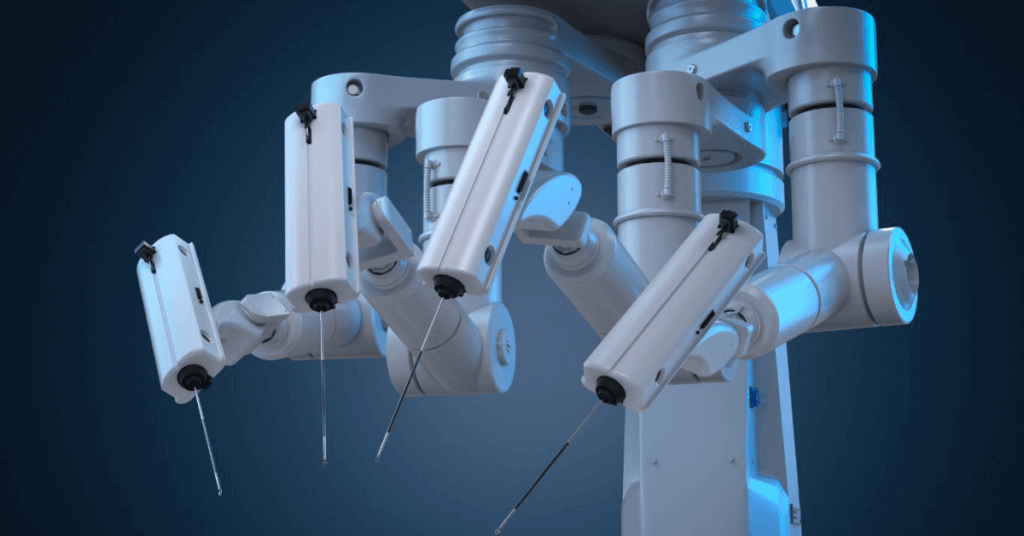
Robotic knee replacement is a form of knee replacement surgery in which a robotic-assisted system helps the surgeon plan and perform specific parts of the procedure.
Depending on the robotic platform being used, the process may involve detailed imaging, three-dimensional planning and intraoperative guidance. This information helps the surgeon assess the patient's anatomy, plan bone preparation and determine the intended position and alignment of the knee implant.
The robotic system does not replace the surgeon. The surgeon remains responsible for evaluating the patient, creating the surgical plan, performing the procedure and making clinical decisions throughout the operation.
The goal is to combine surgical expertise with technology that can assist with planning and execution of knee replacement surgery.
Dr. Pramod Bhor is an orthopaedic and joint replacement surgeon practising in Navi Mumbai, with a focus on knee and shoulder conditions, joint replacement and robotic-assisted knee surgery.
He completed his MBBS from Bharati Vidyapeeth Medical College, Pune, followed by an MS in Orthopaedics from Dr. D.Y. Patil Medical College and Hospital, Pune, in 2006.
His professional training and experience include joint replacement, orthopaedic trauma, arthroscopy and robotic-assisted joint replacement procedures.
Dr. Bhor's areas of expertise include:
According to Joint Robo's current clinical information, Dr. Bhor has performed 1,000+ partial and total knee replacement, joint replacement and arthroscopic procedures.
Learn more about Dr. Pramod Bhor's expertise in robotic and joint replacement surgery →Robotic technology does not mean that every patient with knee pain requires knee replacement.
Knee replacement may be considered when arthritis or other damage to the knee is causing significant symptoms and conservative treatment has not provided adequate relief.
You may be evaluated for knee replacement if you experience:
Your surgeon will assess your symptoms, physical examination, medical history and imaging before recommending surgery.
Robotic assistance may be considered when it is clinically appropriate for the planned knee replacement.
Robotic-assisted and conventional knee replacement are both established approaches to knee replacement surgery.
The main difference is the technology used to assist with surgical planning and execution.
| Feature | Robotic-Assisted Knee Replacement | Conventional Knee Replacement |
|---|---|---|
| Surgical planning | Computer-assisted planning may be used | Conventional planning and imaging |
| Patient anatomy | Planning can be tailored to individual anatomy | Surgeon plans using conventional techniques |
| Intraoperative assistance | Robotic system can provide guidance | Conventional surgical instruments |
| Surgeon involvement | Surgeon remains in control | Surgeon remains in control |
| Implant positioning | Technology can assist with planned positioning | Positioning is performed using conventional techniques |
| Suitability | Depends on individual patient and surgical plan | Suitable for many knee replacement patients |
Robotic assistance is a surgical tool rather than a replacement for clinical judgement. Your surgeon will recommend the most appropriate approach based on your condition.
The exact process varies depending on the robotic system and the patient's treatment plan. A typical pathway includes the following stages.
When appropriate for the patient, robotic assistance can provide additional support during the planning and execution of knee replacement surgery. Potential benefits include:
However, robotic technology does not guarantee a specific result. Recovery and long-term outcomes also depend on factors such as the patient's overall health, severity of arthritis, implant selection, surgical technique and rehabilitation.
At Joint Robo, the treatment journey generally involves:
Robotic-assisted knee replacement systems can provide several technological capabilities that support the surgical workflow. These may include:
The exact capabilities vary between robotic platforms. Joint Robo uses the technology available for the patient's planned procedure and treatment requirements.
Robotic knee replacement is not automatically better for every patient.
Robotic assistance may provide additional planning and intraoperative guidance, but conventional knee replacement remains an appropriate and effective treatment option for many patients.
The right approach depends on:
A consultation with an experienced joint replacement surgeon can help determine which approach is appropriate for you.
The cost of robotic knee replacement in Navi Mumbai can vary depending on the type of surgery, implant selected, hospital facilities, robotic technology used and the patient's individual treatment requirements. The following figures provide an approximate estimate:
| Surgery Type | Estimated Cost |
|---|---|
| Robotic Total Knee Replacement Surgery | ₹3.5–₹7 lakh |
| Minimally Invasive Knee Replacement Surgery | ₹2.75–₹6 lakh |
These are estimated treatment costs and may vary depending on the hospital, surgeon's fees, implant type and brand, robotic technology, room category, investigations, medicines, consumables and duration of hospital stay.
The final cost may depend on several factors, including:
Depending on the hospital package, the treatment estimate may include some or all of the following:
The exact inclusions can vary between hospitals and treatment packages. Patients should confirm the final package and inclusions with the hospital before scheduling surgery.
The figures above are intended only as a general estimate. The actual cost of robotic knee replacement can be determined after evaluating your knee condition, reviewing the required investigations and deciding on the appropriate surgical and implant plan.
Consult Dr. Pramod Bhor at Joint Robo for an individual assessment and a detailed treatment-cost estimate.
Contact Joint RoboRecovery after knee replacement is progressive rather than immediate. The timeline can vary depending on age, fitness, muscle strength, medical conditions, mobility before surgery and participation in rehabilitation.
First Few Days
The focus is generally on:
First 2–6 Weeks
Patients gradually work on:
Walking aids may be used temporarily depending on the patient's recovery.
6–12 Weeks
Many patients gradually increase their daily activities as strength
and mobility improve. The timing of returning to work, driving or specific activities depends on
individual recovery and medical advice.
Beyond 3 Months
Strength, flexibility and functional improvement can
continue for several months. Your surgeon and physiotherapist will guide you on activity progression
and long-term rehabilitation.
Your surgeon may recommend several evaluations before surgery, including:
Following your medical team's instructions before surgery can help you prepare for the procedure and recovery period.
Robotic assistance does not eliminate the risks associated with knee replacement surgery.
Potential complications may include:
Your surgeon will explain the potential risks and benefits based on your individual health and treatment plan.
Joint Robo provides robotic joint replacement services through affiliated hospital facilities in Kharghar, Navi Mumbai.
Kharghar Medicity Hospital
Sector 7, Kharghar, Navi Mumbai, Maharashtra 410210.
Medicover Hospital, Navi Mumbai
Sector 10, Kharghar, Navi Mumbai, Maharashtra 410210.
The hospital where your surgery is performed will depend on your treatment plan, surgeon availability and hospital arrangements.
Choosing knee replacement surgery is an important decision, and hearing about other patients' experiences can help you understand the treatment journey.
Patient experiences can differ, so individual recovery should always be discussed with your treating surgeon.
Joint Robo focuses on combining orthopaedic expertise with technology-assisted joint replacement and structured patient care.
Patients can access:
Consultation with Dr. Pramod Bhor
The purpose of robotic technology is to support the surgeon's planning and execution of the procedure while keeping the patient's individual anatomy and clinical needs at the centre of treatment.