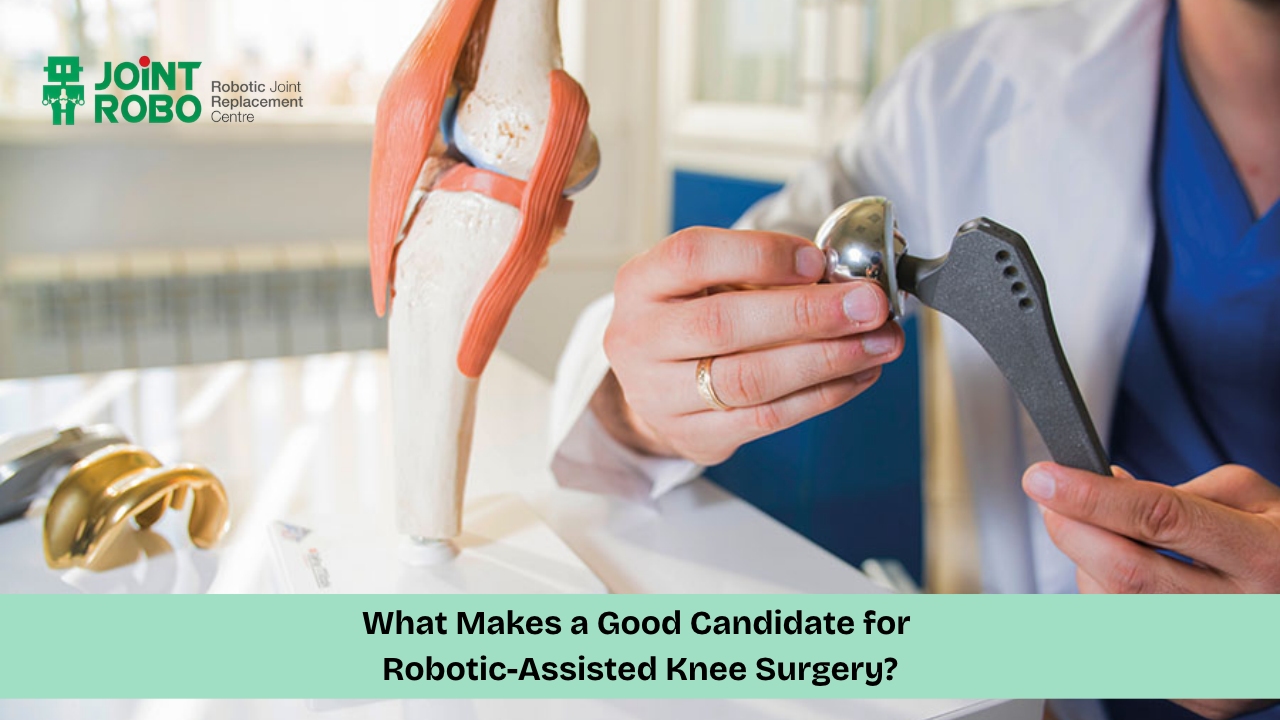
Knee pain can gradually change the way you walk, climb stairs, exercise, or even perform simple daily activities. When medicines, physiotherapy, injections, and other non-surgical treatments no longer provide enough relief, knee replacement may become an option. With advances in surgical technology, robotic knee replacement in Navi Mumbai has become one of the approaches that patients may discuss with their orthopaedic surgeon.
However, robotic-assisted knee surgery is not automatically the right choice for everyone with knee pain. A person's diagnosis, degree of joint damage, symptoms, overall health, activity level, bone condition, and treatment goals all need to be considered.
So, what makes someone a good candidate for robotic-assisted knee surgery? Understanding the factors involved can help you have a more informed conversation with your orthopaedic surgeon.
Robotic-assisted knee replacement combines conventional surgical techniques with computer-based planning and robotic technology.
Before surgery, the surgeon may use imaging to create a detailed understanding of the patient's knee anatomy. This information can help the surgical team plan aspects such as:
During surgery, the robotic system can help the surgeon follow the planned approach and make controlled bone cuts or assist with implant positioning.
Importantly, the robot does not perform the operation independently. The orthopaedic surgeon remains responsible for the procedure and makes the clinical decisions throughout surgery.
There is no single age, weight, or activity level that automatically makes someone suitable or unsuitable for robotic-assisted knee replacement.
Instead, doctors generally look at several factors.
Robotic-assisted knee replacement is generally considered when the knee has substantial structural damage that is causing persistent symptoms.
Common causes include:
X-rays and other assessments help the surgeon determine how much damage has occurred and whether knee replacement is appropriate.
Having arthritis alone does not necessarily mean you need surgery. The severity of symptoms and their effect on your quality of life are also important.
The decision to undergo knee replacement is not based only on an X-ray.
A person may be considered for surgery when knee pain and stiffness begin interfering with activities such as:
If knee pain is consistently limiting your independence despite appropriate non-surgical treatment, your surgeon may discuss replacement options with you.
Knee replacement is generally not the first treatment for knee arthritis.
Depending on the condition, doctors may initially recommend options such as:
If these measures no longer provide adequate relief and the knee damage is advanced, surgery may become a reasonable consideration.
One potential advantage of robotic-assisted surgery is the ability to create a detailed, patient-specific surgical plan.
Every knee is slightly different. Factors such as bone shape, alignment, deformity, previous injury, and joint condition can influence how a replacement is planned.
Computer-assisted planning may help the surgeon understand the patient's anatomy before entering the operating room and make adjustments during the procedure based on the findings.
This does not mean that every patient requires robotic assistance. Your surgeon will determine whether the technology adds meaningful value in your particular case.
Some patients have significant changes in the alignment or structure of the knee because of advanced arthritis, previous injuries, or other conditions.
In selected cases, robotic-assisted technology can provide additional information during planning and help the surgeon work within a defined surgical plan.
However, the presence of a deformity does not automatically mean robotic surgery is necessary. The surgeon needs to assess the type and severity of the deformity and determine the most appropriate surgical approach.
Robotic technology does not eliminate the usual considerations associated with major surgery.
Before knee replacement, your medical team may evaluate:
Some medical conditions may need to be controlled before surgery.
The goal is not simply to determine whether you can undergo robotic-assisted surgery, but whether knee replacement itself can be performed safely.
Not necessarily.
Knee replacement is usually considered based on symptoms, joint damage, functional limitations, overall health, and the expected benefits of surgery rather than age alone.
A younger patient with severe joint damage may require surgery, while an older patient with relatively manageable symptoms may not.
Your surgeon will consider your individual circumstances rather than using age as the only deciding factor.
No.
Many people with knee arthritis can manage their symptoms without replacement surgery, particularly when the disease is mild or moderate.
Other patients may benefit from conventional knee replacement rather than robotic-assisted surgery.
There are also situations where another procedure may be more appropriate. For example, depending on the location and extent of arthritis, a surgeon may consider partial knee replacement, osteotomy, or non-surgical treatment.
The important question is not simply:
“Can I have robotic knee replacement?”
It is:
“Which treatment is most appropriate for my knee and my individual situation?”
Robotic-assisted and conventional knee replacement both aim to relieve pain and improve knee function.
The major difference is the technology used to plan and assist the procedure.
| Factor | Robotic-Assisted Knee Replacement | Conventional Knee Replacement |
|---|---|---|
| Surgical planning | Computer-assisted planning may be used | Conventional planning and surgical techniques |
| Surgeon control | Surgeon remains in control | Surgeon remains in control |
| Implant positioning | Robotic technology can assist with positioning | Surgeon uses established surgical techniques |
| Individual planning | Can provide detailed patient-specific planning | Based on imaging and intraoperative assessment |
| Suitability | Depends on individual anatomy and clinical situation | Suitable for many patients |
| Recovery | Depends on many individual factors | Depends on many individual factors |
Robotic assistance should not be viewed as a replacement for surgical experience. The surgeon's diagnosis, planning, technical skill, decision-making, and postoperative care remain important.
Being overweight does not automatically rule out robotic knee replacement.
However, higher body weight can influence surgical planning, anaesthesia, wound healing, mobility, rehabilitation, and the overall risk profile of knee replacement.
Your surgeon may therefore discuss weight management before surgery if it can improve your safety or recovery.
This should be approached as part of personalised surgical preparation rather than as a simple yes-or-no eligibility rule.
Having a medical condition does not automatically make knee replacement impossible.
For example, patients with diabetes may still undergo knee replacement, but good blood sugar management can be important before surgery.
Similarly, patients with heart disease, high blood pressure, obesity, or other chronic conditions may require additional medical evaluation and optimisation.
Your orthopaedic surgeon may work with other specialists when necessary to make sure you are medically prepared for surgery.
Your evaluation may include several components, depending on your health and the type of surgery being considered.
These may include:
Your surgeon will ask about:
The knee may be assessed for:
X-rays are commonly used to evaluate arthritis and bone changes. Depending on the robotic system and surgical plan, additional imaging may be considered.
Blood tests, cardiac evaluation, anaesthesia assessment, or other investigations may be recommended depending on your age and medical history.
Together, these assessments help determine whether knee replacement is appropriate and whether robotic assistance may be beneficial.
Being a good surgical candidate also means understanding that surgery is only one part of recovery.
After knee replacement, rehabilitation commonly involves:
Robotic assistance does not guarantee a faster or easier recovery. Recovery varies from person to person and can depend on age, muscle strength, general health, pre-surgery mobility, surgical findings, pain management, and commitment to rehabilitation.
If you are considering robotic knee replacement in Navi Mumbai, ask your orthopaedic surgeon questions such as:
These questions can help you understand not only the technology but also the overall treatment plan.
Technology is only one part of successful knee replacement care.
When evaluating a robotic knee surgeon in Navi Mumbai, consider the surgeon's:
A good consultation should help you understand why a particular procedure is being recommended rather than simply presenting robotic surgery as a more advanced option.
Not necessarily. Severe arthritis may make knee replacement appropriate, but the choice between robotic-assisted and conventional surgery depends on your anatomy, health, treatment goals, and your surgeon's assessment.
Robotic assistance can improve aspects of surgical planning and help with bone preparation and implant positioning. However, current evidence does not show that robotic surgery is universally superior for every patient. The appropriate approach depends on the individual case.
No. The surgeon performs and controls the operation. Robotic technology is used as a planning and surgical assistance tool.
Age alone does not determine eligibility. The surgeon considers the severity of joint damage, symptoms, functional limitations, overall health, and whether knee replacement is appropriate.
Recovery varies between individuals. Rehabilitation, muscle strength, general health, pain control, and adherence to physiotherapy can all influence recovery.
It may be possible in selected cases. The surgeon will evaluate the type and severity of the deformity and determine whether robotic assistance is appropriate.
A detailed consultation with an experienced orthopaedic surgeon is the best way to determine this. Your diagnosis, imaging, symptoms, medical history, and treatment goals should all be considered.
Being a good candidate for robotic-assisted knee surgery involves much more than having knee arthritis. The decision depends on the severity of joint damage, pain and functional limitations, response to non-surgical treatments, overall health, knee anatomy, and the potential value of computer-assisted planning and surgical technology.
If knee pain is affecting your quality of life and conservative treatments are no longer providing enough relief, discussing your options with an experienced orthopaedic surgeon can help you understand whether robotic knee replacement in Navi Mumbai is appropriate for your condition.
At Joint Robo, patients can discuss their knee condition, available treatment options, and whether robotic-assisted surgery may be suitable for their individual needs with an orthopaedic joint replacement specialist.