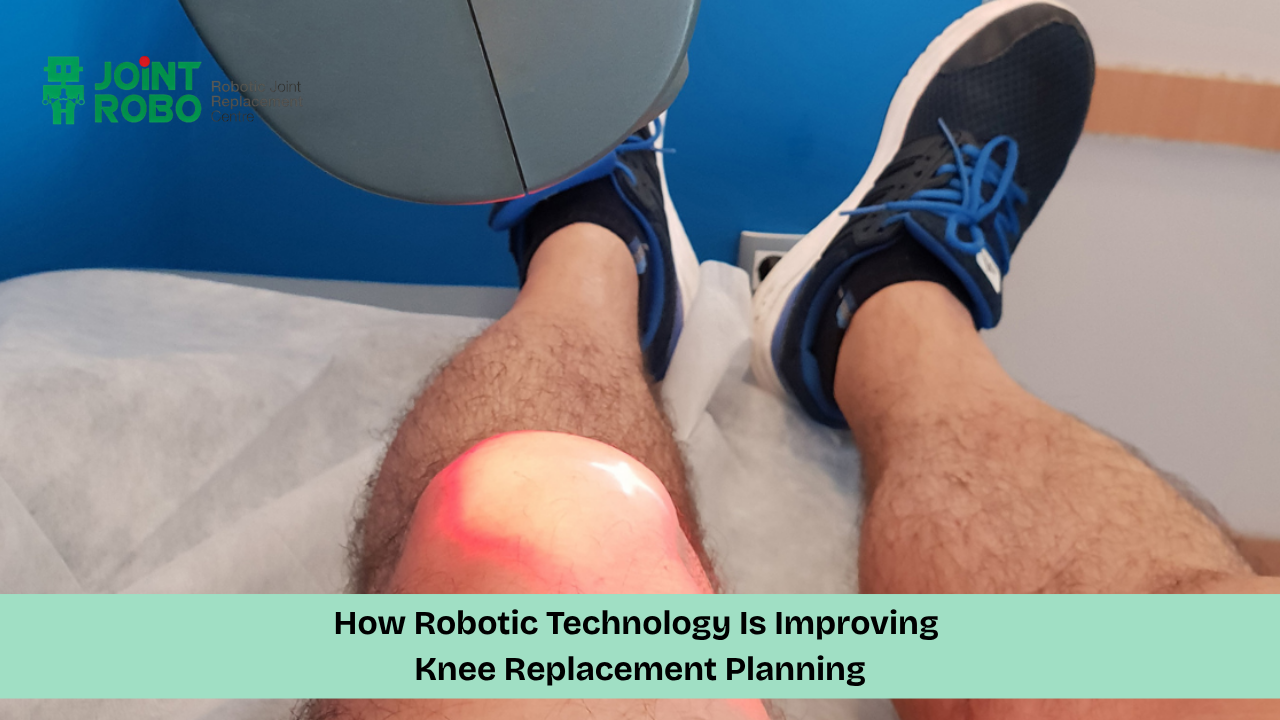
How Robotic Technology Is Improving Knee Replacement Planning
Knee replacement surgery has evolved significantly over the years. While the fundamental goal remains the same—to relieve pain and improve knee function—advances in imaging, computer-assisted planning, and robotic technology have introduced new ways for surgeons to assess the knee and prepare for surgery.
One of these developments is robotic-assisted knee replacement. For patients considering robotic knee replacement in Navi Mumbai , understanding how the technology is used before and during surgery can make the treatment decision easier.
In robotic-assisted knee replacement surgery in Navi Mumbai, the technology does not replace the orthopaedic surgeon. Instead, it can provide additional information and tools that may assist with surgical planning, alignment assessment, bone preparation, and implant positioning.
But what exactly happens during robotic knee replacement planning, and how can it differ from conventional planning?
What Is Knee Replacement Planning?
Before knee replacement surgery, the surgeon needs to understand the patient's knee in detail.
Planning can involve evaluating:
- The extent of joint damage
- Knee alignment
- Bone anatomy
- Joint stability
- Ligament condition
- Location of arthritis
- Appropriate implant size
- Position of the implant components
- The patient's functional requirements
This information helps the surgeon determine how the damaged joint surfaces should be prepared and how the artificial components should be positioned.
Good planning is important because every patient's knee is different.
What Is Robotic-Assisted Knee Replacement?
Robotic-assisted knee replacement combines the surgeon's expertise with computer-based planning and technology-assisted surgical guidance.
Depending on the robotic system being used, the process may involve:
- Assessing the patient's knee anatomy
- Creating a digital surgical plan
- Evaluating alignment and joint balance
- Making adjustments to the surgical plan
- Using technology to guide parts of the procedure
- Preparing the bone according to the planned parameters
- Positioning the implant components
An important point for patients to understand is that the robot does not independently perform the surgery.
The orthopaedic surgeon remains in control and makes the clinical decisions throughout the procedure.
How Does Robotic Technology Help With Planning?
The main difference is the amount of digital information that may be available to the surgeon.
Traditional knee replacement planning can rely on physical examination, X-rays, measurements, surgical instruments, and the surgeon's experience.
Robotic-assisted systems can add computer-based information to this process.
Depending on the system, the surgeon may be able to visualise the patient's anatomy digitally and simulate aspects of the planned procedure before making the surgical cuts.
This can help the surgeon understand how different implant positions may affect alignment and knee balance.
1 More Detailed Understanding of Knee Anatomy
Every knee has individual anatomical characteristics.
Patients can differ in:
- Bone shape
- Leg alignment
- Joint-space changes
- Bone defects
- Arthritis location
- Ligament condition
Robotic-assisted planning can provide a digital representation of relevant anatomy, depending on the system used.
This additional information can help the surgeon develop a plan tailored to the patient's knee rather than relying only on standard measurements.
2 Assessment of Knee Alignment
Alignment is an important part of knee replacement planning.
The surgeon needs to consider how the leg and knee are aligned and how the implant components should be positioned.
Computer-assisted technology can provide measurements and visual information that help the surgeon evaluate alignment during planning and surgery.
The objective is to achieve an appropriate alignment and a stable, functional knee based on the patient's individual anatomy.
3 Planning Implant Positioning
Implant positioning is another important part of knee replacement.
The surgeon needs to determine:
- Implant size
- Position
- Orientation
- Bone preparation
- Relationship between components
Robotic systems can allow the surgeon to create and review a digital plan before proceeding with the surgical steps.
If adjustments are needed, the plan may be modified before or during the procedure, depending on the technology being used.
4 Understanding Joint Balance
A knee replacement needs to function with the surrounding ligaments and soft tissues.
Joint balancing refers to achieving appropriate stability and movement of the knee after the damaged surfaces have been replaced.
Robotic-assisted systems may provide information about the knee's movement and soft-tissue balance during surgery.
This information can help the surgeon make informed decisions about bone preparation and implant positioning.
However, the technology does not independently determine the correct treatment. The surgeon interprets the information and decides how to proceed.
5 Simulating the Surgical Plan
One of the useful features of computer-assisted planning is the ability to assess the proposed surgical strategy before completing the procedure.
Depending on the system, the surgeon may be able to evaluate different parameters and see how changes could affect alignment or positioning.
This allows the surgical team to think through the procedure before and during surgery.
The goal is to reduce uncertainty and provide a structured surgical plan.
6 Real-Time Information During Surgery
Planning does not necessarily stop once surgery begins.
Some robotic systems provide real-time information that can help the surgeon assess the knee during the procedure.
This may include information about:
- Alignment
- Bone position
- Joint movement
- Soft-tissue balance
- Planned versus actual positioning
The surgeon can use this information to make clinical decisions during surgery.
This is one of the differences between simply having a preoperative plan and having technology that can also provide intraoperative guidance.
How Is Robotic Planning Different From Conventional Planning?
Both approaches are designed to achieve the same fundamental goal: a well-planned knee replacement appropriate for the patient's condition.
The difference lies largely in the tools available to the surgeon.
| Planning Factor | Conventional Approach | Robotic-Assisted Approach |
|---|---|---|
| Physical examination | Yes | Yes |
| X-rays/imaging | Yes | Depending on system |
| Surgeon assessment | Yes | Yes |
| Computer-based planning | Limited/varies | Often incorporated |
| Digital anatomical assessment | Limited/varies | May be available |
| Real-time computer guidance | Not typically used | May be available |
| Robotic assistance | No | Yes |
| Surgeon controls procedure | Yes | Yes |
| Rehabilitation required | Yes | Yes |
The exact features vary between robotic systems, so patients should ask which technology their surgical centre uses.
Does Better Planning Mean a Better Outcome?
Better planning is important, but it does not guarantee a particular outcome.
Knee replacement results depend on many factors, including:
- Correct diagnosis
- Appropriate patient selection
- Surgeon experience
- Surgical technique
- Implant selection
- Implant positioning
- Infection prevention
- Patient health
- Rehabilitation
- Individual healing
Robotic technology can support the planning and surgical process, but it is only one part of the overall treatment.
Does Robotic Planning Improve Surgical Precision?
Robotic-assisted systems are designed to provide detailed measurements and guidance during surgery.
This can help the surgeon work within a planned range for bone preparation and component positioning.
However, patients should be cautious about interpreting this as a guarantee of perfect accuracy or better long-term results.
The clinical importance of improved alignment or positioning depends on the individual patient and other factors affecting knee function.
Does Robotic Planning Reduce the Risk of Complications?
Robotic technology does not eliminate the risks of knee replacement.
Potential complications can include:
- Infection
- Blood clots
- Bleeding
- Nerve or blood-vessel injury
- Stiffness
- Persistent pain
- Knee instability
- Implant-related complications
- Need for additional surgery
Robotic-assisted procedures can also involve technology-specific considerations, depending on the system used.
Your surgeon should explain the potential benefits and risks before surgery.
Does Robotic Planning Mean a Faster Recovery?
Not necessarily.
One of the common misconceptions about robotic knee replacement is that the technology automatically leads to faster recovery.
Recovery depends on many factors, including:
- Patient age
- Overall health
- Muscle strength
- Severity of arthritis
- Surgical findings
- Pain management
- Physiotherapy
- Activity levels
- Individual healing
Robotic technology may help with surgical planning and execution, but it does not remove the need for rehabilitation.
Patients considering robotic knee replacement surgery in Navi Mumbai should ask their surgeon for a realistic recovery timeline rather than assuming that robotic assistance guarantees faster rehabilitation.
What Happens Before Robotic Knee Replacement?
The planning process typically begins with a detailed consultation.
1 Step 1: Clinical Evaluation
The surgeon discusses your symptoms, medical history, previous treatments, and daily limitations.
2 Step 2: Physical Examination
The knee may be evaluated for movement, stability, alignment, swelling, and muscle strength.
3 Step 3: Imaging
The surgeon may review X-rays or other imaging to understand the extent of joint damage.
Depending on the robotic system and surgical workflow, additional imaging may be required for computer-assisted planning.
4 Step 4: Treatment Decision
The surgeon determines whether knee replacement is appropriate and discusses alternatives.
5 Step 5: Surgical Planning
If robotic-assisted surgery is selected, the relevant anatomical information is incorporated into a computer-based plan.
6 Step 6: Final Review
The surgeon reviews the plan and makes appropriate adjustments based on the patient's anatomy and clinical requirements.
What Role Does the Surgeon Play?
Technology is only as useful as the clinical decisions made around it.
The surgeon is responsible for:
- Diagnosing the underlying problem
- Deciding whether surgery is appropriate
- Choosing the surgical approach
- Interpreting imaging
- Developing the treatment plan
- Making intraoperative decisions
- Managing unexpected findings
- Guiding the robotic system
- Overseeing postoperative care
This is why choosing an experienced orthopaedic surgeon remains important even when robotic technology is being used.
What Should You Ask About the Robotic System?
If you are researching robotic knee replacement in Navi Mumbai , consider asking your surgeon:
- Which robotic system is used?
- Does it require a CT scan or other imaging?
- How is my surgical plan created?
- What information does the system provide during surgery?
- How does it assist with alignment?
- How does it help with implant positioning?
- What are the limitations?
- Would conventional surgery be equally appropriate for me?
- What evidence supports its use for my situation?
These questions can help you understand the technology rather than relying solely on marketing descriptions.
Is Robotic Knee Replacement Suitable for Everyone?
No.
Robotic-assisted knee replacement may be considered for patients who are appropriate candidates for knee replacement, but not every patient necessarily requires robotic assistance.
Your surgeon may consider:
- Extent of arthritis
- Knee alignment
- Ligament condition
- Bone quality
- Previous surgeries
- Overall health
- Functional goals
- Available technology
- Surgical complexity
The decision should be individualised.
What Does Current Evidence Say?
Research on robotic-assisted knee replacement continues to evolve.
The American Academy of Orthopaedic Surgeons has previously reported that short-term evidence did not show a significant difference in function, outcomes, or complications between robotic-assisted and conventional total knee replacement.
More recent research continues to investigate potential differences in patient satisfaction, quality of life, alignment, revision rates, and long-term outcomes.
A 2026 study presented at the AAOS Annual Meeting reported greater quality-of-life improvement and higher patient satisfaction at one year among patients who underwent robotic-assisted total knee replacement in that study population. Such findings are useful but do not establish that robotic surgery will produce the same benefit for every patient.
Therefore, patients should consider robotic assistance as one part of a broader treatment decision.
Choosing a Centre for Robotic-Assisted Knee Replacement
If you are considering robotic knee replacement in Navi Mumbai , look beyond the robotic equipment itself.
Consider:
Orthopaedic Expertise
Does the surgeon have appropriate training and experience in knee replacement?
Technology
What robotic platform is available, and how is it used?
Hospital Infrastructure
Are appropriate surgical, anaesthesia, monitoring, and emergency facilities available?
Rehabilitation
Is physiotherapy available after surgery?
Follow-Up
Is there a structured postoperative follow-up plan?
Patient Communication
Does the team explain the procedure, risks, alternatives, and recovery clearly?
A comprehensive treatment pathway is more important than technology alone.
Final Thoughts
Robotic technology is changing the way some knee replacement procedures are planned by providing computer-assisted information, digital surgical planning, alignment assessment, and intraoperative guidance.
For suitable patients, robotic knee replacement in Navi Mumbai may provide access to technology-assisted planning that can be tailored to individual knee anatomy.
However, robotic technology is not a substitute for an experienced orthopaedic surgeon. It also does not guarantee faster recovery, less pain, or a particular long-term outcome.
The most important step is to understand your diagnosis and discuss all appropriate treatment options with your surgeon. If robotic-assisted surgery is being considered, ask how the technology will be used in your specific case and what realistic benefits you can expect.
Frequently Asked Questions
1. How does robotic technology help with knee replacement planning?
It can provide computer-based information about knee anatomy, alignment, and surgical parameters. Depending on the system, it may also assist with intraoperative navigation and bone preparation.
2. Does the robot perform knee replacement surgery?
No. The orthopaedic surgeon performs and controls the procedure. The robotic system is a technology tool that can assist with planning and parts of the surgical process.
3. Does robotic planning guarantee better implant positioning?
Robotic systems are designed to assist with planned positioning and provide measurements, but they do not guarantee a particular surgical or long-term outcome.
4. Is robotic knee replacement more precise than conventional surgery?
Robotic systems can provide detailed digital measurements and guidance. However, the clinical significance of this additional precision varies, and conventional knee replacement remains an established treatment.
5. Does robotic-assisted surgery reduce recovery time?
It may have potential benefits for some patients, but faster recovery is not guaranteed. Rehabilitation depends on many individual factors.
6. Does robotic knee replacement require a CT scan?
It depends on the robotic system and surgical workflow. Some systems use CT-based planning, while others use different approaches. Your surgical team can explain what imaging is required.
7. How do I know if robotic-assisted knee replacement is right for me?
Your orthopaedic surgeon can evaluate your knee condition, anatomy, alignment, overall health, and treatment goals and discuss whether robotic assistance is appropriate.
Considering Robotic-Assisted Knee Replacement?
If persistent knee pain, stiffness, or difficulty walking is affecting your daily life, an orthopaedic evaluation can help determine the most appropriate treatment.
If you are exploring robotic knee replacement in Navi Mumbai , discuss your diagnosis, surgical options, potential benefits and limitations, expected recovery, and rehabilitation plan with a qualified orthopaedic specialist.
Disclaimer
This article is for general educational purposes and should not replace professional medical advice, diagnosis, or treatment. Robotic-assisted and conventional knee replacement may both be appropriate depending on the individual patient. Always follow the recommendations of your treating orthopaedic surgeon.