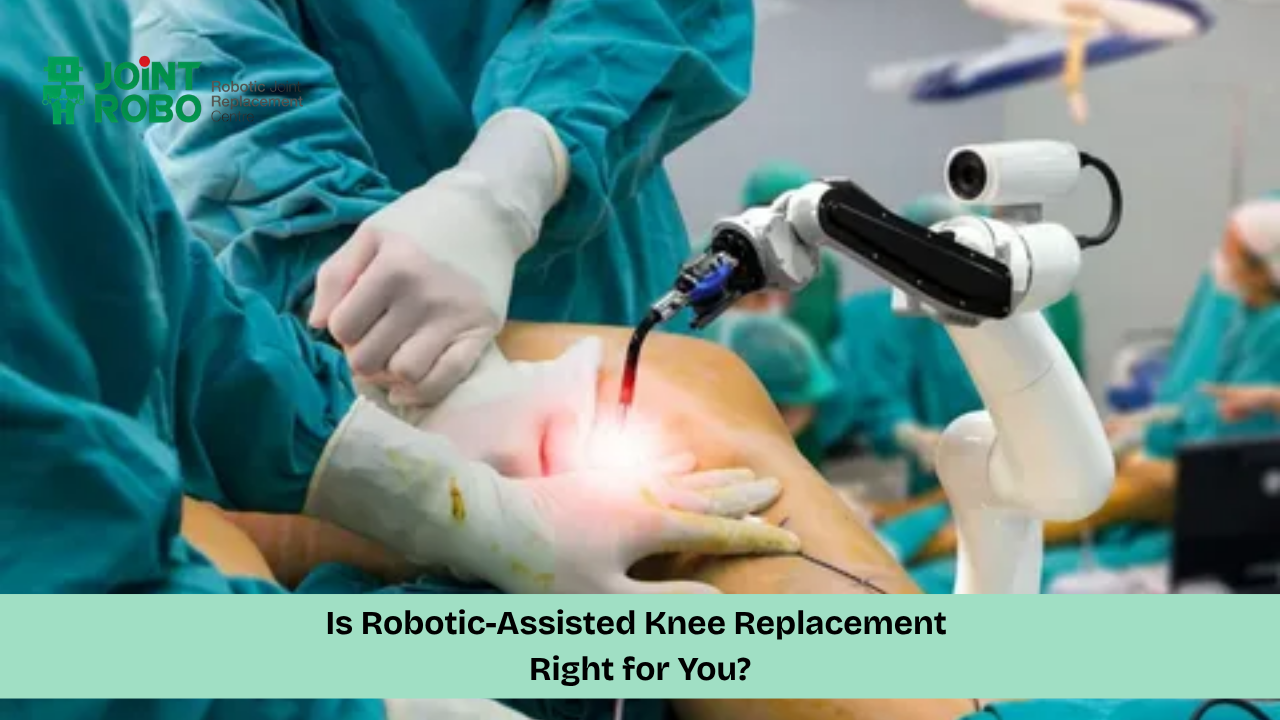
Is Robotic-Assisted Knee Replacement Right for You?
Knee arthritis can gradually affect the way you walk, climb stairs, work, exercise, and perform everyday activities. When pain and stiffness become severe and other treatments no longer provide enough relief, knee replacement may be considered.
With advances in orthopaedic technology, patients today may have the option of robotic-assisted knee replacement. But does using robotic technology automatically make knee replacement the right choice for everyone?
Not necessarily.
Robotic knee replacement in Navi Mumbai is one treatment option that may be appropriate for selected patients. The decision depends on factors such as the extent of arthritis, knee alignment, joint stability, overall health, treatment goals, and the surgeon's assessment.
Understanding how robotic-assisted surgery works and who may benefit from it can help you have a more informed discussion with your orthopaedic surgeon. You can also read about all types of knee replacement in Navi Mumbai offered at Joint Robo.
What Is Robotic-Assisted Knee Replacement?
Robotic-assisted knee replacement combines conventional orthopaedic surgical techniques with computer-based planning and robotic technology.
The technology may help the surgical team:
- Plan the procedure based on the patient's anatomy
- Assess knee alignment
- Provide computer-assisted guidance during surgery
- Assist with bone preparation
- Help with implant positioning
- Provide information that can support surgical decision-making
An important point to understand is that the robot does not independently perform the knee replacement.
The orthopaedic surgeon remains responsible for the procedure and controls the surgical process. Robotic technology acts as a tool that can assist the surgeon during planning and surgery.
Why Is Robotic Technology Used?
Every knee is different.
Patients can have variations in bone shape, alignment, joint damage, ligament condition, and soft-tissue balance. Traditional surgical techniques already allow surgeons to account for many of these factors.
Robotic-assisted systems can provide additional digital information and planning capabilities.
Depending on the system, this may allow the surgeon to develop a more detailed surgical plan and make adjustments based on information obtained during the procedure.
The goal is not simply to use a robot. The goal is to help the surgeon perform the planned procedure appropriately for the patient's individual anatomy.
Who May Be Considered for Robotic-Assisted Knee Replacement?
Robotic-assisted surgery may be discussed with patients who have significant knee arthritis and are being considered for knee replacement.
Potential candidates may include people experiencing:
- Persistent knee pain
- Significant stiffness
- Difficulty walking
- Reduced ability to climb stairs
- Difficulty performing everyday activities
- Reduced quality of life because of knee problems
- Advanced joint damage on imaging
- Symptoms that have not improved adequately with appropriate non-surgical treatment
However, having knee arthritis does not automatically mean you need robotic-assisted surgery.
The first question should always be whether knee replacement itself is appropriate.
When Is Knee Replacement Usually Considered?
Knee replacement may be considered when several factors come together.
Your orthopaedic surgeon may evaluate:
Severity of Symptoms
Pain that consistently interferes with daily life may be an important consideration.
Functional Limitations
Difficulty walking, standing, climbing stairs, sleeping, or performing routine activities may indicate that your knee problem is significantly affecting your quality of life.
Joint Damage
X-rays and other imaging can help assess the extent of cartilage and bone changes.
Response to Non-Surgical Treatment
Depending on your condition, treatments such as exercise, physiotherapy, medicines, weight management, injections, or activity modification may be tried before surgery.
Overall Health
Your general health and ability to undergo surgery and rehabilitation are also important.
Does Everyone Need Robotic-Assisted Surgery?
No.
Robotic-assisted knee replacement is not automatically necessary for every patient who needs knee replacement.
Conventional knee replacement remains an established treatment option and can provide good outcomes for many patients.
The choice between conventional and robotic-assisted surgery may depend on:
- Knee anatomy
- Extent and location of arthritis
- Alignment
- Ligament condition
- Bone quality
- Previous surgeries
- Patient health
- Surgeon experience
- Available technology
- Individual treatment goals
A surgeon should recommend the approach based on the patient's clinical situation rather than simply choosing the newest technology.
What Are the Potential Benefits?
One reason patients consider robotic knee replacement in Navi Mumbai is the potential for more detailed surgical planning.
Depending on the technology used, potential advantages may include:
1. Detailed Preoperative Planning
Some robotic systems use imaging and computer-based planning to create a surgical plan based on the patient's anatomy.
2. Computer-Assisted Guidance
During surgery, technology can provide information about alignment and positioning that may assist the surgeon.
3. Individualised Planning
Instead of relying only on standard measurements, robotic-assisted systems may provide additional information about the individual patient's knee.
4. Assistance With Bone Preparation
The technology may help guide the surgeon during preparation of the bone surfaces.
5. Support for Implant Positioning
Robotic systems can provide information that assists the surgeon in positioning components according to the surgical plan.
These are potential advantages of the technology. They should not be interpreted as a guarantee of better pain relief, faster recovery, or longer implant survival for every patient.
Does Robotic Knee Replacement Mean More Precision?
Robotic-assisted systems are designed to provide detailed information and guidance during surgery.
However, precision is only one part of successful knee replacement.
A good outcome also depends on:
- Correct diagnosis
- Appropriate patient selection
- Surgical planning
- Surgeon experience
- Implant selection
- Soft-tissue management
- Infection prevention
- Rehabilitation
- Patient health and healing
Technology should therefore be viewed as one component of the overall treatment process.
Does Robotic Surgery Mean Faster Recovery?
This is one of the most common questions patients ask.
The answer is not necessarily.
Some research has explored whether robotic-assisted knee replacement can improve recovery or patient-reported outcomes, and findings have varied across studies and patient groups.
Recovery depends on many factors, including:
- Age
- General health
- Muscle strength
- Extent of arthritis
- Surgical findings
- Pain management
- Physiotherapy
- Activity level
- Individual healing
Therefore, patients considering robotic knee replacement surgery in Navi Mumbai should not choose the procedure solely on the expectation of a faster recovery.
Your surgeon should provide a realistic recovery plan based on your specific circumstances.
Is Robotic-Assisted Surgery Safer?
Robotic technology does not eliminate the risks associated with knee replacement.
Potential complications can include:
- Infection
- Blood clots
- Bleeding
- Nerve or blood-vessel injury
- Stiffness
- Persistent pain
- Instability
- Implant-related complications
- Need for additional surgery
Robotic-assisted surgery has its own technology-related considerations as well, depending on the system used.
Your surgeon should explain the potential benefits and risks before you make a decision.
Robotic vs Conventional Knee Replacement
It is useful to understand that robotic-assisted and conventional knee replacement are not completely different operations.
Both involve:
- Removing damaged joint surfaces
- Preparing the bone
- Positioning artificial components
- Checking knee stability and movement
- Closing the surgical wound
- Beginning postoperative rehabilitation
The major difference is the technology used to assist with planning, navigation, and parts of the surgical process.
| Factor | Conventional Knee Replacement | Robotic-Assisted Knee Replacement |
|---|---|---|
| Surgeon performs the operation | Yes | Yes |
| Computer-assisted planning | May be limited | Often incorporated |
| Robotic technology | No | Yes |
| Individualised digital planning | Depends on technique | May be available |
| Surgical navigation | Conventional instruments/techniques | May include computer guidance |
| Rehabilitation required | Yes | Yes |
| Faster recovery guaranteed | No | No |
| Suitable for every patient | No | No |
The choice should be based on individual clinical needs rather than the assumption that one approach is universally superior.
What Does the Research Say?
Evidence regarding robotic-assisted knee replacement continues to develop.
Earlier clinical evidence reviewed by the American Academy of Orthopaedic Surgeons found no significant short-term difference in function, outcomes, or complications between robotic-assisted and conventional total knee replacement in the evidence available for its guideline.
More recent research has explored whether robotic-assisted surgery may provide advantages in patient satisfaction and quality of life. For example, research presented at the AAOS 2026 Annual Meeting reported higher satisfaction and greater quality-of-life improvement at one year among patients receiving robotic-assisted total knee replacement in that particular study population.
These findings do not mean that every patient will experience the same benefit. Research continues to evaluate the longer-term clinical significance of robotic-assisted techniques.
When Might Conventional Surgery Still Be Appropriate?
Conventional knee replacement may remain appropriate when:
- The surgeon believes it is suitable for the patient's anatomy
- The patient's condition does not require robotic assistance
- The expected benefits of robotic technology are limited for that particular case
- Conventional surgical techniques can adequately address the patient's needs
The availability of robotic technology does not make conventional surgery obsolete.
An experienced orthopaedic surgeon should be able to explain why one approach is being recommended over another.
What Should You Ask Your Surgeon?
If you are considering robotic knee replacement in Navi Mumbai , take these questions to your consultation:
About Your Diagnosis
- How severe is my arthritis?
- Is knee replacement necessary now?
- Are there non-surgical treatments I should consider?
About Robotic Surgery
- Would robotic assistance be appropriate for my knee?
- Why do you recommend it in my case?
- What robotic system will be used?
- How does the system assist during surgery?
- What are its potential advantages and limitations?
About Conventional Surgery
- Would conventional knee replacement also be appropriate?
- What are the differences between the two approaches for my condition?
About Recovery
- How long might my recovery take?
- When can I start walking?
- How much physiotherapy will I need?
- When can I return to work and normal activities?
These questions can help you understand whether robotic assistance is relevant to your specific situation.
What Factors Matter When Choosing a Robotic Knee Surgeon?
If you are looking for a robotic knee surgeon in Navi Mumbai, avoid making the decision based solely on the availability of robotic equipment.
Consider the complete treatment pathway.
Surgeon Experience
Ask about the surgeon's qualifications, experience with knee replacement, and familiarity with robotic-assisted procedures.
Hospital Facilities
Consider the availability of appropriate surgical facilities, anaesthesia support, postoperative monitoring, and emergency care.
Rehabilitation
Ask how physiotherapy and postoperative rehabilitation are managed.
Communication
Your surgeon should be willing to explain your condition, treatment alternatives, risks, and expected recovery.
Personalised Treatment
The treatment plan should be based on your anatomy, diagnosis, health, and goals.
How Can You Prepare for Robotic Knee Replacement?
If your surgeon recommends robotic-assisted knee replacement, preparation may include:
- Completing required medical evaluations
- Reviewing current medications
- Addressing medical conditions before surgery
- Maintaining appropriate physical activity
- Strengthening muscles when advised
- Preparing your home
- Arranging transportation
- Organising postoperative support
- Understanding your rehabilitation plan
Your surgical team will provide specific instructions based on your health and planned procedure.
What Happens After Surgery?
Robotic assistance does not change the basic importance of postoperative rehabilitation.
After surgery, your healthcare team may focus on:
- Pain management
- Wound care
- Early mobility
- Knee movement
- Muscle strengthening
- Walking
- Balance
- Gradual return to daily activities
Your physiotherapist will guide you through exercises appropriate for your stage of recovery.
Avoid comparing your progress directly with another patient's recovery. Healing times vary.
So, Is Robotic-Assisted Knee Replacement Right for You?
There is no universal answer.
Robotic-assisted knee replacement may be an appropriate option for some patients, while conventional knee replacement may be suitable for others.
The decision should take into account:
- Your diagnosis
- Severity of arthritis
- Knee anatomy
- Alignment
- Ligament condition
- Overall health
- Previous surgeries
- Treatment goals
- Surgeon assessment
The most important question is not simply “Is robotic surgery better?”
Instead, ask:
“Would robotic assistance provide a meaningful benefit for my particular knee?”
That is a question your orthopaedic surgeon can answer after evaluating your condition and discussing the available options.
Final Thoughts
Robotic-assisted knee replacement represents an important development in modern orthopaedic surgery, particularly because it can provide computer-based planning and technology-assisted guidance during the procedure.
However, robotic technology is not a substitute for an experienced surgeon, appropriate patient selection, careful planning, or rehabilitation.
If you are considering robotic knee replacement in Navi Mumbai , take time to understand both robotic-assisted and conventional options. Ask about the potential benefits, limitations, risks, expected recovery, and whether the technology is appropriate for your specific condition.
An informed discussion with your orthopaedic surgeon can help you understand your options and set realistic expectations before making a treatment decision.
Frequently Asked Questions
1. Who is a good candidate for robotic-assisted knee replacement?
Patients with significant knee arthritis who require knee replacement may be considered for robotic-assisted surgery. Suitability depends on individual anatomy, joint damage, health, and the surgeon's assessment.
2. Is robotic knee replacement suitable for elderly patients?
Age alone does not determine suitability. Overall health, knee condition, functional status, and ability to undergo surgery and rehabilitation are important considerations.
3. Does robotic knee replacement guarantee better results?
No. Robotic technology may provide advantages in surgical planning and guidance, but it does not guarantee better results for every patient.
4. Does robotic-assisted knee replacement hurt less?
Pain after surgery varies between individuals. Robotic assistance should not be presented as a guarantee of less postoperative pain.
5. How long does recovery take after robotic knee replacement?
Recovery varies from person to person. Walking and rehabilitation generally begin early, but the time needed to regain strength, movement, and normal function depends on individual factors.
6. Is robotic knee replacement more expensive than conventional surgery?
Costs can vary depending on the hospital, robotic system, implant, surgeon, investigations, hospital stay, and other factors. Ask the treatment centre for a personalised cost estimate.
7. Should I get a second opinion?
If you are uncertain about whether you need knee replacement or whether robotic assistance is appropriate, discussing your case with another qualified orthopaedic specialist can help you understand your options.
Considering Robotic-Assisted Knee Replacement?
If persistent knee pain, stiffness, or reduced mobility is affecting your daily life, an orthopaedic evaluation can help determine the most appropriate treatment.
If you are considering robotic knee replacement in Navi Mumbai , discuss your diagnosis, treatment alternatives, surgical approach, potential risks, expected recovery, and rehabilitation plan with a qualified orthopaedic specialist.
Disclaimer
This article is intended for general educational purposes only and should not replace professional medical advice, diagnosis, or treatment. The suitability of robotic-assisted or conventional knee replacement varies between patients and should be determined after an individual evaluation by a qualified orthopaedic surgeon.