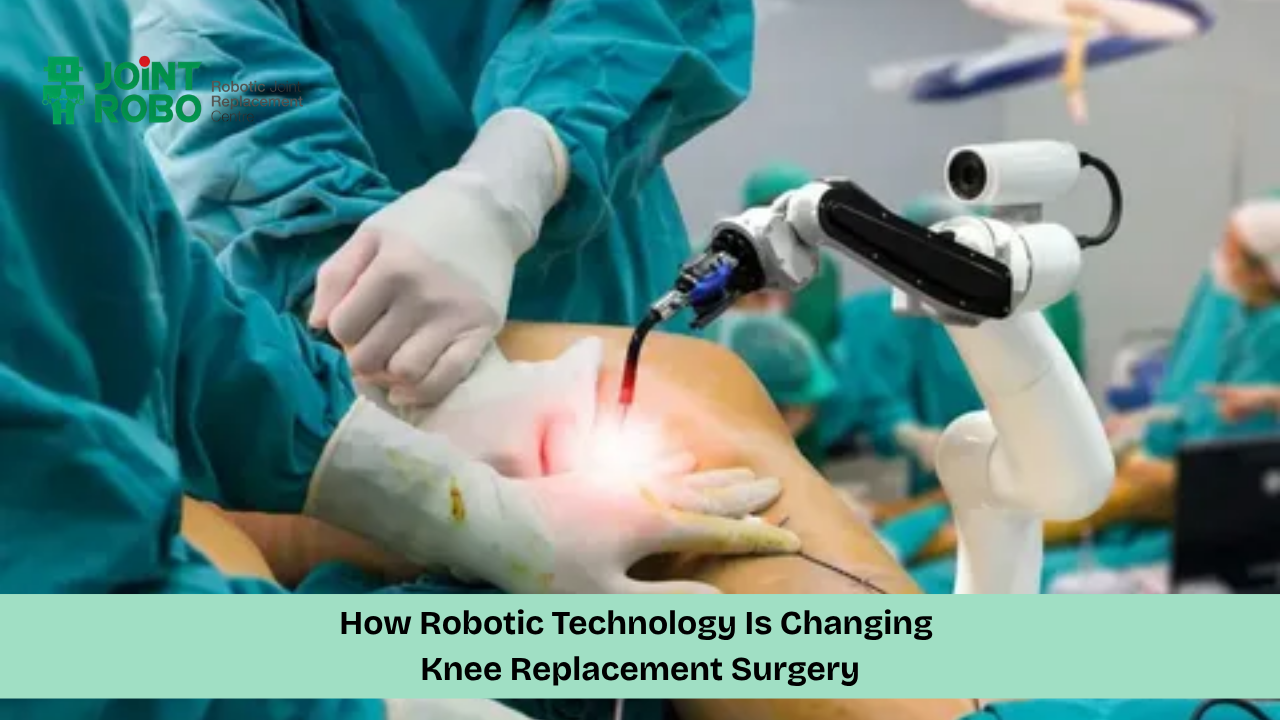
Knee replacement surgery has come a long way over the years. Advances in imaging, computer-assisted planning, surgical navigation, and robotic technology are giving orthopaedic surgeons additional tools to plan and perform joint replacement procedures.
For patients with advanced knee arthritis, these developments can make the treatment journey more personalised. Robotic knee replacement in Navi Mumbai is one such approach, where robotic-assisted technology can support the surgeon during planning and selected parts of the procedure.
But what exactly does robotic technology do during knee replacement? Does a robot perform the surgery? Is robotic surgery suitable for everyone? And does using a robot guarantee better results?
Understanding how the technology works can help patients have a more informed discussion with their orthopaedic surgeon.
Robotic-assisted knee replacement combines conventional surgical expertise with computer-assisted planning and robotic technology.
The procedure still involves the same fundamental goal as conventional knee replacement: removing damaged portions of the joint and replacing them with artificial components.
The difference is that robotic systems can provide additional information and assistance during surgical planning and execution.
Depending on the system used, technology may assist with:
The surgeon remains responsible for the procedure and makes the final clinical decisions.
No.
This is one of the most common misconceptions about robotic knee surgery.
A robotic system does not independently diagnose the patient, decide which implant to use, or perform the entire operation without human control.
Instead, the surgeon uses the technology as an assistance tool.
The surgeon:
The technology is designed to support surgical decision-making and precision, not replace the surgeon's expertise.
The knee is a complex joint that needs to function smoothly after replacement.
During surgery, the surgeon needs to consider factors such as:
Small differences in positioning can influence how the artificial joint functions.
Robotic-assisted systems can provide additional digital measurements and guidance to help surgeons follow a carefully planned procedure.
The goal is to achieve a more controlled and personalised surgical process.
One of the biggest changes brought by technology is the ability to plan aspects of the procedure digitally before entering the operating room.
Depending on the robotic system, the surgeon may use imaging and computer-assisted planning to create a detailed representation of the patient's knee.
This can help the surgical team understand:
A personalised plan can then be developed around the patient's individual anatomy.
No two knees are exactly the same.
Patients can have different:
Robotic technology allows surgeons to work with detailed information about an individual's knee rather than relying solely on standard measurements.
This can be particularly useful when planning complex or anatomically challenging procedures.
However, the final treatment plan still depends on the surgeon's clinical judgement.
During knee replacement, damaged areas of bone need to be prepared so that the artificial components can be positioned appropriately.
Robotic-assisted technology can help the surgeon follow the planned bone preparation more precisely.
The system can provide guidance about where and how much bone needs to be removed according to the surgical plan.
The surgeon remains in control and can make decisions during the operation based on what is observed directly.
Correct implant positioning is an important part of knee replacement surgery.
Robotic technology can provide digital guidance to help the surgeon work toward the planned position and alignment of the implant.
This may help create a more controlled surgical workflow.
However, it is important to understand that robotic assistance does not guarantee a perfect outcome. Surgical expertise, implant selection, patient factors, rehabilitation, and other considerations also contribute to the result.
Alignment plays an important role in knee replacement.
Robotic-assisted systems can provide measurements and computer-generated information that may help surgeons assess alignment during planning and surgery.
This additional information can support decisions about:
The surgeon uses this information alongside clinical judgement to determine the appropriate surgical approach.
A successful knee replacement requires appropriate balance and stability of the joint.
The surgeon needs to consider how the surrounding soft tissues and ligaments interact with the artificial components.
Depending on the robotic platform, technology may provide additional information that assists the surgeon in evaluating the knee during the procedure.
This can help guide adjustments when necessary.
Precision is one of the primary reasons robotic systems are used in joint replacement.
Robotic-assisted systems can combine computer-based planning, navigation, and robotic tools to assist surgeons with bone preparation and implant positioning (orthoinfo.org).
However, precision should not be confused with guaranteed clinical superiority.
The American Academy of Orthopaedic Surgeons has noted that evidence has not established a significant short-term difference in function, outcomes, or complications between robotic-assisted and conventional total knee replacement in its clinical practice guideline (aaos.org).
Research continues to evaluate whether the increased precision offered by robotic systems translates into meaningful long-term patient benefits.
Therefore, robotic technology should be viewed as an additional surgical tool rather than a guarantee of better results.
Depending on the patient's condition and the robotic system being used, potential advantages may include:
It is important to remember that these are potential benefits of the technology and should not be considered guaranteed outcomes.
Not necessarily.
Many patients assume that robotic surgery automatically means they will recover faster. However, recovery after knee replacement depends on many factors.
These include:
Robotic assistance may help with surgical planning and precision, but it does not guarantee a specific recovery timeline.
Your surgeon can provide a more realistic estimate after evaluating your health and planned procedure.
No.
Robotic-assisted knee replacement may be an option for patients who require knee replacement, but suitability needs to be assessed individually.
Your surgeon may consider:
A detailed evaluation helps determine whether robotic-assisted surgery offers meaningful advantages for a particular patient.
Both robotic-assisted and conventional knee replacement aim to relieve pain and improve knee function.
The main difference is the technology used to assist the surgeon.
| Factor | Traditional Knee Replacement | Robotic-Assisted Knee Replacement |
|---|---|---|
| Surgical planning | Conventional imaging and measurements | Computer-assisted planning may be used |
| Technology | Standard surgical instruments | Robotic and navigation technology |
| Bone preparation | Conventional surgical guides | Robotic assistance may guide preparation |
| Implant positioning | Surgeon-guided | Computer-assisted guidance may be available |
| Surgeon control | Surgeon performs the procedure | Surgeon remains in control |
| Patient suitability | Appropriate for many patients | Depends on individual assessment |
The exact workflow can vary depending on the robotic system and the surgeon's technique.
If you are considering robotic knee replacement in Navi Mumbai , the technology available at a hospital is only one factor to consider.
Patients should also look at:
A sophisticated robotic system is useful only when it is combined with appropriate patient selection, careful planning, surgical expertise, and structured rehabilitation.
Robotic technology does not eliminate the need for an experienced orthopaedic surgeon.
The surgeon still needs to understand:
This is why patients should look beyond the technology itself when choosing a robotic knee surgeon in Navi Mumbai.
Recovery after knee replacement generally involves a structured rehabilitation programme.
Depending on your individual condition, rehabilitation may focus on:
Physiotherapy and following your healthcare team's instructions are important parts of recovery.
Your recovery timeline will depend on your health, fitness, procedure, rehabilitation, and individual response to treatment.
Robotic-assisted surgery is an important development in modern knee replacement, particularly because it gives surgeons additional tools for planning and precision.
However, the decision to undergo robotic-assisted surgery should be based on your individual condition rather than the popularity of the technology.
A good question is not simply: "Is robotic surgery better?"
Instead, ask: "Would robotic assistance provide a meaningful benefit for my particular knee?"
An experienced orthopaedic surgeon can help answer this after reviewing your symptoms, examination, imaging, and treatment goals.
No. The surgeon performs and controls the procedure. Robotic technology assists with planning, measurements, navigation, and selected aspects of the surgery.
One of the main advantages is technology-assisted planning and precision. Depending on the system, it can help the surgeon assess anatomy, plan bone preparation, and guide implant positioning.
Robotic assistance does not eliminate the risks associated with knee replacement. Both approaches have potential benefits and risks, and the appropriate technique should be determined by your surgeon.
No. Recovery depends on many factors, including overall health, muscle strength, rehabilitation, the surgical procedure, and individual healing.
Age alone does not determine suitability. Your surgeon will consider your overall health, knee condition, anatomy, and surgical requirements.
The first step is an orthopaedic evaluation. Your surgeon can assess the severity of your knee condition and determine whether knee replacement is needed and whether a robotic-assisted approach may be appropriate.
Yes. Traditional knee replacement remains an established and effective treatment option for many patients. Robotic-assisted surgery is an additional approach that may be appropriate for selected patients.
Robotic technology is changing the way knee replacement surgery can be planned and performed. Advanced digital planning, detailed measurements, navigation, and robotic assistance can give surgeons additional tools to work with a patient's individual anatomy.
But technology is only one part of successful treatment.
The right diagnosis, appropriate patient selection, experienced surgical care, suitable implants, and proper rehabilitation remain essential.
If you are considering robotic knee replacement in Navi Mumbai , the best place to start is with a detailed orthopaedic assessment. Your surgeon can explain whether robotic-assisted surgery is suitable for your condition and how it compares with conventional knee replacement.
At Joint Robo, patients can discuss their knee condition, treatment options, and suitability for robotic-assisted knee replacement with an orthopaedic specialist.
If persistent knee pain is affecting your mobility or quality of life, schedule a consultation with Joint Robo to understand your treatment options and whether robotic-assisted knee replacement may be right for you.
This article is intended for general educational purposes only and should not replace professional medical diagnosis or treatment. Robotic-assisted knee replacement may not be suitable for every patient. Treatment decisions should be made after consultation with a qualified orthopaedic surgeon.